Nosso Futuro Forum - Defending our cities
Period: November 2025
Client / context: Institut français (French Institute) / Nosso Futuro Forum — in collaboration with Je M’engage pour l’Afrique
Location: Salvador de Bahia, Brazil
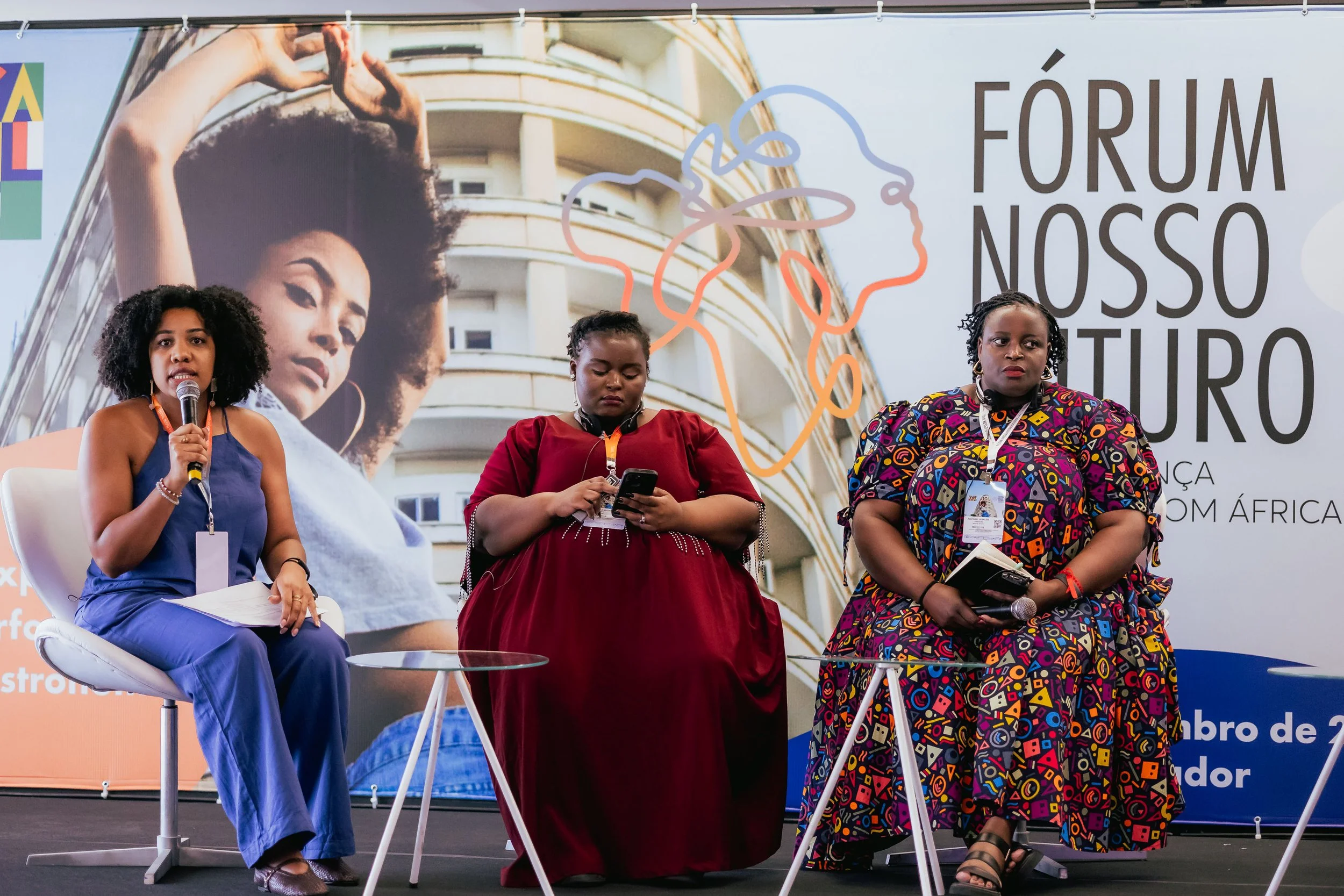
© Diogo Andrade, Institut Français
CONTEXT
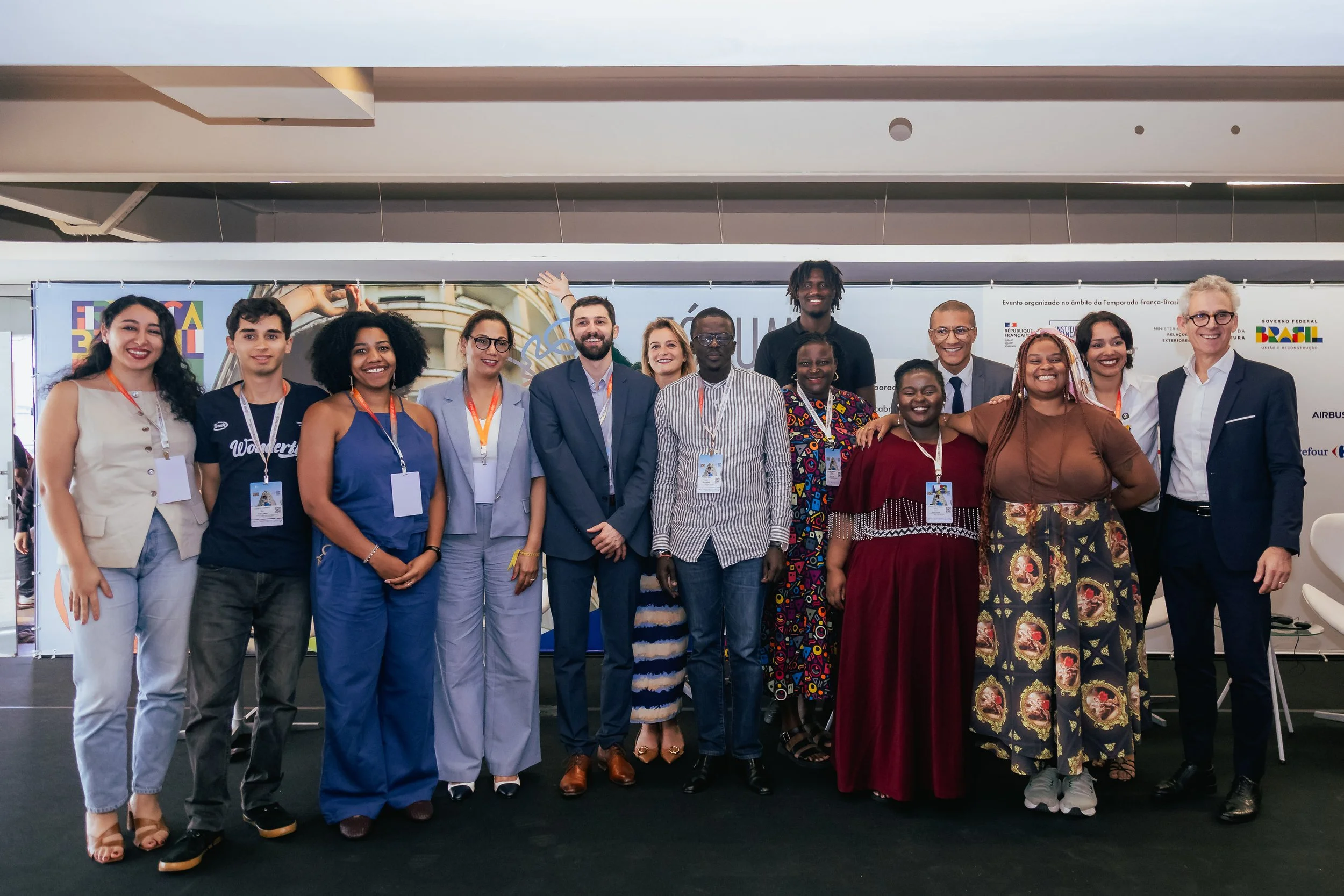
The Nosso Futuro Forum in Salvador de Bahia brought together city officials (French, Brazilian and African elected representatives) alongside urban practitioners, researchers and creatives to discuss the future of cities. I was invited by the Institut Français as part of the Je M’engage pour l'Afrique delegation, and was specifically asked to contribute to a session called 'I Defend My City': practitioners and experts presenting their perspectives on urban justice directly to elected officials, with full creative latitude on framing.
The timing was charged: the week before the forum, Salvador was processing the grief and anger following a heavily militarised police operation in Rio's northern favelas — a massacre that many saw as carrying a particular symbolism ahead of COP30. It could not be ignored.
MY ROLE
I joined forces with Christelle Kwizera (social entrepreneur in water access Rwanda) and Nontando Ngamlana (urban justice leader, South Africa) to develop a joint presentation that connected our three distinct contexts into a single argument. Together, we traced the thread running from Johannesburg's informal settlements to Salvador's favelas to Marseille and the Paris banlieues — arguing that while these contexts differ in expression, the underlying systems resonate: neighbourhoods labelled informal or illegal, communities criminalised for surviving where services have failed, basic infrastructure withheld, hyperpolicing and abandonment as two sides of the same coin.
But we chose not to present only grievance. The central argument of our intervention was about recognition: communities act long before institutions do. They build neighbourhood safety, spaces of dignity, livable cities, without permission or resources. Defending cities means shifting from project to process, from enforcement to co-design, from treating informality as pathology to recognising it as a source of urban resilience and innovation.
WHAT CAME OUT OF IT
A joint intervention across three continents delivered to an audience of elected local officials and urban practitioners
Quoted in the French national newspaper Libération following the session
Concrete framing on informality, urban justice and co-design now available as a basis for speaking and advisory engagements
© Diogo Andrade, Institut Français
